
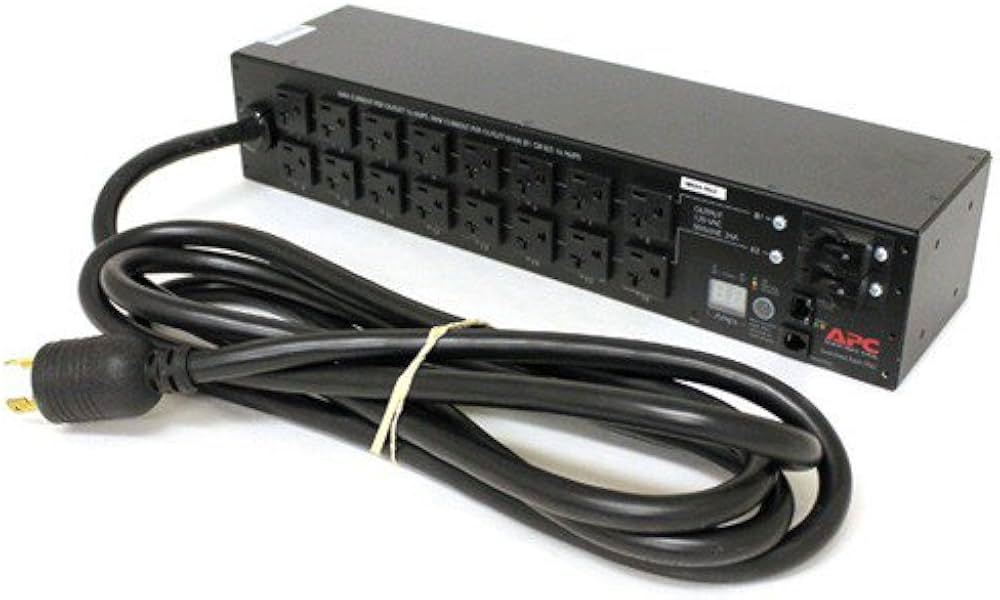

Modern data centers and industrial facilities depend on uninterrupted, well-managed power distribution to maintain operational stability. As systems grow denser and workloads become more power-intensive, managing electrical distribution at the rack level has become a strategic priority. In this context, the rack PDU has evolved into a vital infrastructure element rather than a passive accessory.
Serving as the final point of power delivery to critical equipment, rack-mounted power solutions play a central role in efficiency, safety, and scalability. Their importance spans from high-density server environments to complex industrial control systems.
Understanding the Function of Rack PDUs
A rack power distribution unit is designed to distribute electrical power from a primary source to multiple devices within a rack enclosure. It ensures that servers, networking equipment, and industrial electronics receive consistent and reliable power.
Unlike basic power strips, rack PDUs are engineered for continuous operation, higher load capacities, and structured cable management. They are specifically built to meet the demands of mission-critical environments where downtime is not an option.
Why Rack-Level Power Management Matters
As equipment density increases, centralized power management becomes insufficient. Rack-level distribution allows for more precise control, easier monitoring, and improved fault isolation.
Key advantages of rack PDUs include:
- Efficient power allocation across connected devices
- Reduced cable clutter within racks
- Improved airflow and thermal management
- Faster troubleshooting during power-related issues
These benefits contribute directly to operational reliability and system uptime.
Rack PDUs as Electromechanical Components
From a systems perspective, a rack PDU qualifies as a critical Electromechanical Component. It combines electrical functionality with mechanical design elements that support durability, safety, and ease of integration.
Mechanical features such as mounting brackets, outlet orientation, and enclosure materials are as important as electrical specifications. Together, these elements ensure that the PDU performs reliably under varying environmental and load conditions.
Applications Beyond Traditional Data Centers
While rack PDUs are commonly associated with data centers, their use extends well beyond IT environments. Industrial facilities, automation systems, and control rooms also rely on rack-mounted power distribution for organized and secure power delivery.
Typical application areas include:
- Data centers and server rooms
- Industrial automation panels
- Telecommunication facilities
- Test and measurement laboratories
In each of these settings, structured power distribution simplifies maintenance and enhances safety.
Supporting Scalability and Future Expansion
One of the defining benefits of rack PDUs is their ability to support scalable infrastructure. As facilities expand or equipment is upgraded, PDUs provide a flexible foundation for accommodating additional loads.
Modular designs and standardized mounting options allow operators to adapt power distribution layouts without extensive rewiring. This flexibility is essential in environments where technology evolves rapidly.
Enhancing Safety and Compliance
Electrical safety is a top priority in high-power environments. Rack PDUs are designed to meet stringent safety and performance standards, reducing the risk of overloads, overheating, or accidental disconnections.
By using purpose-built rack PDUs, organizations can:
- Maintain compliance with electrical regulations
- Reduce fire and equipment damage risks
- Improve overall system reliability
These safety-focused features make rack PDUs an integral part of responsible power infrastructure planning.
Integration with Modern Monitoring and Control Systems
In advanced installations, rack PDUs are often integrated with monitoring and control solutions. While the fundamental role remains power distribution, this integration allows operators to gain better visibility into power usage and load distribution.
Improved insight supports informed decision-making around capacity planning, energy efficiency, and preventive maintenance.
Power Infrastructure for High-Density Environments
High-density racks place significant demands on power delivery systems. Rack PDUs are engineered to handle these demands by offering high current ratings, reliable connectors, and robust construction.
By ensuring stable power at the rack level, these units help protect sensitive equipment and maintain consistent performance even under peak loads.
Building Reliable Power Distribution Frameworks
As data centers and industrial environments continue to evolve, the importance of dependable power distribution cannot be overstated. Rack PDUs serve as a foundational element that supports efficiency, safety, and scalability.
By recognizing rack PDUs as essential electromechanical components and integrating them thoughtfully into infrastructure design, organizations can build resilient systems that are prepared for both current demands and future growth.
